

EARNED SETTLEMENT CONFIRMED: THE NEW UK ILR RULES EXPLAINED (2026)
Share this

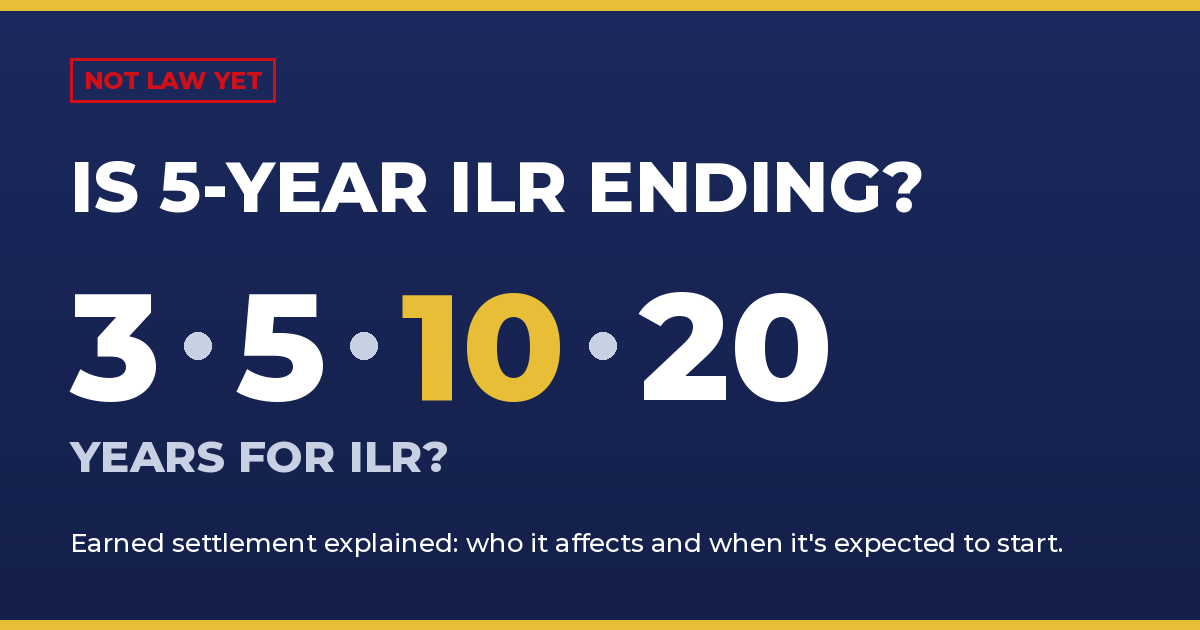
The government has confirmed how "earned settlement" will work. For most people, the qualifying period for indefinite leave to remain (ILR) would increase from five to ten years. Some people would qualify after three or five years, and some would have to wait twenty.
The most important point is that none of this is law yet. The current ILR rules still applyuntil the new Immigration Rules are laid and come into force.
In this guide, I explain what the government has decided, who it affects, what changedafter the consultation, and when the new rules are expected to start.
Watch the video: earned settlement explained
In this 10-minute video, I explain the new 3, 5, 10 and 20-year pathways to ILR, whatchanged after the consultation, and when the new rules are expected to start. Subscribe to Expert Immigration Advice UK for the rest of the Earned Settlement series.
On this page
- What is earned settlement?
- Who does earned settlement apply to?
- The minimum requirements for everyone
- The four earned settlement pathways
- What changed after the consultation
- Who is outside the new framework?
- When does earned settlement start?
- Worked examples
- 5 common mistakes to avoid while the rules change
- Frequently asked questions
What is earned settlement?
Earned settlement is the government's new framework for deciding when someone canapply for ILR, also known as settlement or permanent residence.
On 2 November 2026, the Home Secretary, Shabana Mahmood, made a statement toParliament, and the Home Office published its response to the consultation
A Fairer Pathway to Settlement . That consultation received over 200,000 responses.
The principle behind the policy is that settlement should not be automatic: it should beearned. In other words, how long you wait would depend on your
contribution, your integration and your compliance with the rules, not just the time you have spent in the UK.
Who does earned settlement apply to?
Earned settlement would apply to almost everyone in the UK who does not yet have ILR.That includes:
- Skilled Workers
- Health and Care Workers
- partners and dependants
- students and graduates planning their future in the UK
If you already have ILR, or settled status under the EU Settlement Scheme, earnedsettlement does not affect your status.
Not sure where you stand? Book a confidential consultation with me to discuss your case in detail.
The minimum requirements for everyone
Whichever pathway you are on, you would need to meet minimum requirements. These cannot be offset by a high salary or public service.
- Good character and no criminal record. Under the new policy, any adult with a UK criminal record would be refused. That includes cautions, fines and discharges, not just prison sentences.
- No outstanding government debt, such as NHS debt, unpaid tax or National Insurance, or legal costs owed to the Home Office.
- English English at Level B2, unless an exemption applies.
- The Life in the UK test, with the existing exemptions.
- Sustained contribution: earnings of at least £12,571 a year for the required period.This is the threshold for paying income tax and National Insurance.
Exemptions apply to children, people aged 65 and over, and people who cannot meet a requirement because of a physical or mental condition.
The four earned settlement pathways
Under the new framework, there would be four main pathways to ILR.
| Pathway | Who it would apply to |
|---|---|
| 3 years | People earning at least £125,141 a year in three of the four years before applying, and certain people on the highest talent routes |
| 5 years | People earning at least £50,271 in three of the last five years; people in eligible health and education jobs (for example doctors, nurses and teachers); and people with a British connection, such as the partners, parents and children of British citizens |
| 10 years | The new starting point for everyone else who meets the minimum requirements |
| 20 years | People who have committed an immigration breach as an adult, such as overstaying, or who have claimed public funds in the five years before applying |
There are also separate pathways for refugees. I do not advise on asylum matters, so if this affects you, please seek advice from an adviser who does.
Over the coming weeks, I'll cover each pathway in detail: [Settlement after 3 years] · [5years: higher earners] · [5 years: health and education] · [5 years: partners] · [10 years] · [20years].
What changed after the consultation
Some of the original proposals have been dropped or softened:
- The 15-year pathway for jobs below degree level has been dropped. Those workers would now be on the ten-year pathway, unless they qualify for a shorter one.
- Families can combine their earnings. A couple can meet the earnings requirement together, with a combined threshold of £25,142.
- A "best years" approach. Earnings would be looked at over a longer period, so maternity leave, caring responsibilities or illness would not automatically put you on a longer pathway.
- Transitional protection for some care workers and public service workers who came to the UK before the Immigration White Paper of May 2025.
However, two proposals that might have helped have also been dropped: volunteerin gand C1 English would no longer reduce your qualifying period.
Who is outside the new framework?
Some groups would keep their existing route to settlement, including:
- BN(O) visa holders from Hong Kong, who stay at five years
- members of the armed forces
- bereaved partners
- victims of domestic abuse
- the Windrush generation
- the Afghan resettlement schemes
The EU Settlement Scheme is not affected at all.
But please note: the government says most of these groups would still need to meet thestricter criminality rule and the B2 English standard, unless an exemption applies.
When does earned settlement start?
At the time of writing, the new pathways are not yet in the Immigration Rules. The Home Secretary told Parliament that the changes will start to be laid from December 2026 and will be implemented over the course of 2027. The exact dates, and any transitional provisions, will only be confirmed when the rules are published.
| Stage | Timing |
|---|---|
| Policy confirmed | 2 November 2026 |
| Immigration Rules changes start to be laid | From December 2026 |
| Implementation | Over the course of 2027 |
One important point. The government's response says that, unless transitional provisions are made, settlement applications are ordinarily considered under the rules in force at the date of the decision, not the date you apply. So applying just before the changes may not, on its own, protect you.
If you are close to your five years, please get legal advice now rather than later.
Worked examples
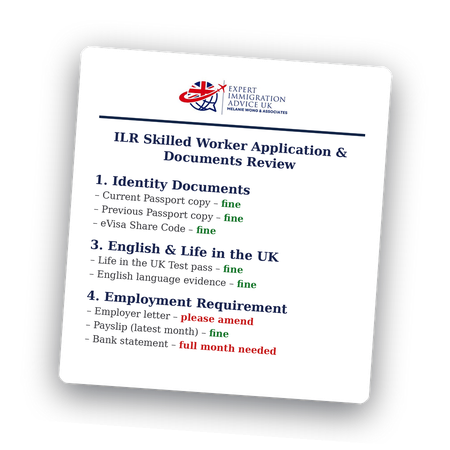
If the applicant is a national of, or has lived 6+ months in, a country on the Home Office TB testing list, they must have a TB test at an approved clinic before applying. Arjun is a software engineer on a Skilled Worker visa. He arrived on 1 September 2023 and earns £58,000 a year. Under the current rules, he reaches five years on 1 September 2028.Under the new framework, his earnings are above £50,271, so he would still be on the five-year pathway, as long as he meets the minimum requirements.
Grace is also a Skilled Worker, but she earns £38,000. Under the current rules, she would also reach five years in 2028. Under the new framework, she would be on the ten-year pathway, unless her salary rises above £50,271 for three of the five years before she applies, or she qualifies another way.
These examples are illustrations only. The final rules will confirm exactly how earnings are measured.
How a Home Office caseworker sees it
Caseworkers do not apply announcements or consultation responses. They apply the Immigration Rules in force, and any transitional provisions. Until the new rules are laid and in force, the current rules still apply.
I'm often asked: "Have I already lost my right to apply for ILR after five years?" If the current rules still apply when your application is decided, the answer is no. But because the new rules are expected over 2027, and decisions can take months, please get advice on your timing before you apply.
The 5 most common mistakes to avoid while the rules change
- Assuming earned settlement is already law. It isn't. Until the rules change, the current rules apply.
- Assuming that applying early will protect you. Applications are ordinarily decided under the rules in force at the date of decision, unless transitional provisions say otherwise.
- Forgetting about old cautions, fines or discharges. Under the new policy, any adult UK criminal record would lead to refusal.
- Overlooking government debts. Unpaid NHS charges, tax or National Insurance, or Home Office legal costs could stop your application.
- Not checking whether you have received public funds, directly or indirectly. Claiming public funds in the five years before applying could put you on the 20-year pathway.
Frequently asked questions
Is earned settlement law yet?
No. The government has confirmed the policy, but the new pathways are not yet in the Immigration Rules. The changes are expected to start being laid from December 2026 and to be implemented over 2027.
Will I have to wait 10 years for ILR?
For most people, ten years would be the new starting point. You may qualify sooner, after three or five years, if you are a high earner, work in an eligible health or education job, o rare the partner, parent or child of a British citizen.
Does earned settlement affect people who already have ILR or settled status?
No. If you already have ILR, or settled status under the EU Settlement Scheme, your status is not affected.
Can I still apply for ILR after five years?
Yes, while the current rules remain in force. But because decisions can take months and the new rules are expected over 2027, get advice on your timing before you apply.
I'm the partner of a British citizen. Will I have to wait longer?
Under the new framework, partners of British citizens would be on the five-year pathway, provided they meet the minimum requirements.
Can my partner and I combine our earnings?
Yes. A couple can meet the earnings requirement together, with a combined threshold of £25,142.
What level of English will I need?
English at Level B2, unless an exemption applies. C1 English would no longer reduce your qualifying period.
Can I get advice on my own situation?
Yes. If you are close to your five years, or you have a criminal record, an immigration breach or have received public funds, please seek advice as soon as possible. I do not offer legal aid, so my consultations and legal services entail a fee.
Book a consultation HERE
Related Posts


Share this:

While every effort has been made to ensure that the information and law contained in this article is accurate and current as of the date of publication, we accept no responsibility for its accuracy or for any loss or damages arising from accessing, or the reliance, of this guidance.
Please also note that the information does not represent a complete statement of the Law and does not constitute legal advice.
If you would like specific professional advice about your UK immigration matter, please consider booking a consultation or one of my other legal services.

Making a UK Visa or Settlement application can be a stressful experience, and whilst there is a lot of ‘free’ information online, finding clear expert guidance that is up to date, and in line with your specific requirements can be a daunting task.
If you have any concerns about your case, it is recommended to reach out for advice from a trusted legal professional.

